Can Low-Sugar Functional Sodas Fit Into a Weight Management Plan?

Dr. Chomba Chuma, MD, Founder, Velobiotics
2026-10-20T06:06:26+02:00 · 10 min read
First published on the Velobiotics blog.
In this article
A low-sugar soda can fit into a weight-management plan as one beverage choice, but it is not a weight-loss solution and cannot determine the result on its own. Compare calories, serving size and sugar on the actual label, then consider the drink alongside meals, activity, sleep, medicines and personal health needs. A 30-calorie can may be a lower-energy option than some sugary drinks, but water and unsweetened drinks remain useful everyday choices.
Key takeaways
- A drink with less sugar may contain less energy than a comparable sugar-sweetened version, but the total pattern matters more than one product.
- Read the serving size and nutrition panel, not only front-label phrases such as “functional” or “gut-friendly”.
- Probiotics and prebiotic fibre are not established weight-loss shortcuts; their presence does not establish a clinical outcome.
- Weight management is personal. A clinician or registered dietitian can help tailor advice, especially with a medical condition or medication.
Start with the question behind the question
When someone asks me whether a low-sugar fizzy drink is “okay” while managing weight, I first ask what role the drink plays. Is it replacing a regular sugary soda? Is it an occasional choice? Is it being counted as a meal replacement or expected to suppress appetite? Those are different questions, and a responsible answer should not turn one nutrition number into a promise.
A beverage can contribute calories and sugars, and swapping one drink for another can change that contribution. But a single product cannot account for a person's overall intake, appetite, routines, activity, sleep, health conditions, medicines or access to food. Public-health guidance describes weight as influenced by multiple factors, not simply willpower or one ingredient. The CDC overview of healthy weight and weight loss and the World Health Organization's overview of obesity and overweight both describe broader influences and the value of sustainable approaches.
So my practical answer is measured: a low-sugar soda may be a reasonable preference within a person's eating pattern. It should not be marketed or understood as a product that makes people lose weight.
What “low sugar” does, and does not, tell you
Sugar is one part of a drink's nutrition profile. A lower amount can be useful when comparing similar servings, especially if the alternative is a sweetened beverage. Yet “low sugar” is not synonymous with calorie-free, nourishing, or suitable for every person. Portion size matters, as do other ingredients and what else is consumed during the day.
Check the number of servings in the container and whether the panel is per serving or per 100 ml. In South Africa, labels may use different layouts from those in the United States or United Kingdom, so look for the actual quantities rather than relying on a coloured badge. If a can is described as 30 calories, ask whether that figure applies to the whole can and check the final local label when the product is available.
The NHS guide to managing weight emphasizes practical, sustainable habits rather than quick fixes. For beverages, Harvard's Healthy Drinks guidance also offers a useful reminder: water and unsweetened options can be everyday defaults, while other drinks are considered in context.
A calm way to compare two cans
Use the same sequence each time you compare drinks. First, compare equal volumes or the whole container if that is how you typically drink it. Next, note calories and sugars. Then look at fibre, caffeine, sweeteners and any other ingredients that matter to you. Finally, consider taste and whether the choice is affordable and realistic enough to keep in your routine.
For example, if a person replaces a daily higher-sugar soda with a drink that has less sugar and fewer calories, the beverage part of their routine changes. For pre-launch product context, see the story behind the drink, its flavour information, the Gut Joy philosophy and common questions. That is not proof that the replacement causes weight loss. The person may drink a different amount, add other foods, or have a medical situation that changes their needs. A label comparison can describe the products; it cannot predict an individual's body-weight outcome.
Be cautious about front-of-pack claims such as “metabolism” or “belly fat” that are presented as evidence. Marketing language can imply more than the nutrition panel or research supports. The Harvard guide to healthy drinks offers a useful general reference, though local labelling rules differ.
Where functional ingredients fit
Some drinks include fibre, live microorganisms or both. A prebiotic is a substrate selectively used by host microorganisms that confers a health benefit, while probiotics are live microorganisms that, when administered in adequate amounts, confer a health benefit on the host. These definitions come from the International Scientific Association for Probiotics and Prebiotics consensus publication. They describe categories of ingredients, not a universal effect on body weight.
A product combining a probiotic and a prebiotic is often called a synbiotic. Whether a particular formulation has a demonstrated effect depends on details such as the strains, amounts, food matrix, study population and outcome measured. One cannot infer a weight-management result merely from the word “synbiotic”, a CFU count, or fibre grams. For a plain-language overview of probiotics, see ISAPP's consumer resource.
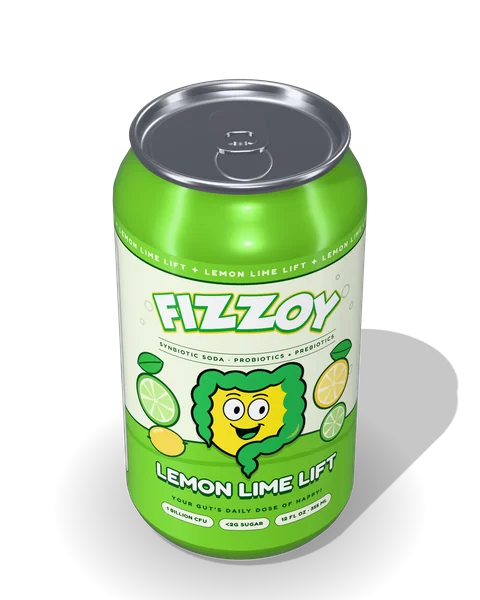
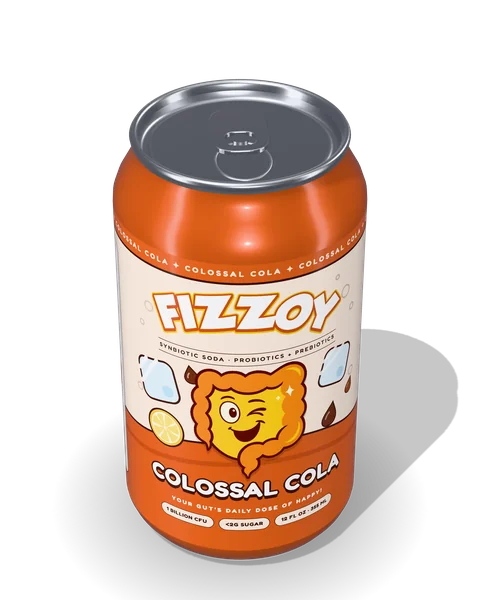
One pre-launch formulation under development describes a 355 ml can with 30 calories, 3 g prebiotic fibre, under 2 g sugar, and 1 billion CFU live probiotics protected by SCO2 microencapsulation. The intended product description is the world's first SCO2 microencapsulated synbiotic soda. These composition details do not mean the drink causes weight loss or has been proven to change weight. It is not on sale, and the final package label should guide any future purchase decision. Read more about SCO2 science and the microencapsulation research overview.
Fibre deserves a gradual, individual approach
Dietary fibre is present in many everyday foods, including beans, lentils, vegetables, fruit, oats and whole grains. Some beverages also contain added prebiotic fibre. Tolerance varies: a sudden increase can be uncomfortable for some people, particularly if they are sensitive to particular fermentable carbohydrates. A drink with fibre should not displace the variety of foods that make up an overall eating pattern.
If you have noticed that a certain ingredient or portion size does not suit you, take that observation seriously without assuming that all fibre is harmful. Consider trying a smaller amount or discussing it with a dietitian or clinician. People with diagnosed gastrointestinal conditions may have individual advice that differs from broad nutrition guidance. A product's “functional” positioning does not remove the need to pay attention to your own response.
Build routines around more than beverages
Weight management is easier to approach as a set of repeatable habits than as a search for one perfect product. Depending on the person, useful elements may include regular meals, accessible foods that are satisfying, movement that can be sustained, restorative sleep and support for stress or emotional eating. For some, a clinician may also discuss medicines or other evidence-based care. The right plan is the one that is safe and workable for that person, not a generic internet challenge.
Beverage decisions can be small and practical. Keep water accessible. If you enjoy bubbles, compare sparkling water or an unsweetened option with the drinks you already choose. If you want sweetness, inspect the full label and decide what fits your preference and health context. If a lower-sugar functional drink helps replace a higher-sugar beverage you regularly consume, that may be a relevant substitution, but it remains one part of the picture.
I also encourage people not to moralize food. A soda is not a failure, and choosing a low-sugar alternative is not a solution by itself. Shame rarely helps people build stable routines. Curiosity works better: What do I enjoy? What leaves me satisfied? What can I afford and access? What advice is appropriate for my health?
Common pitfalls in weight-focused drink marketing
The first pitfall is equating “less sugar” with “weight loss”. The second is presenting a probiotic or fibre as a proven appetite suppressant without product-specific evidence. The third is comparing one can with a different serving size or ignoring the rest of a person's day. These shortcuts can create unrealistic expectations and distract from more useful conversations.
Another pitfall is assuming that “natural” means clinically effective or that “zero” means automatically better. Sweeteners and individual preferences deserve a fair discussion, but a label alone cannot establish how a particular person will respond. If you have a specific concern about an ingredient, consult a qualified professional who can consider your history and the evidence.
For a product to make a health claim responsibly, the claim should be specific, supported and appropriate to the market's rules. At the point of writing, the drink discussed here is pre-launch; this article discusses its stated formulation only and does not present it as a weight-loss product.
Questions to take to a clinician
If you are making a substantial change to your diet, have an eating disorder history, are pregnant, have diabetes or another chronic condition, or use medicines that affect appetite or digestion, ask your clinician for individual guidance. A registered dietitian can help translate general principles into an eating plan that respects your preferences, culture, budget and medical needs.
A clinician can also help if your weight changes unexpectedly or if attempts to manage weight are affecting your mood, energy or relationship with food. Seek medical advice rather than relying on a beverage if you have persistent symptoms, rapid unexplained weight change, severe abdominal pain, repeated vomiting, blood in stool, or signs of dehydration. Urgent or severe symptoms warrant prompt care.
A realistic conclusion
A low-sugar functional soda can fit into a weight-management plan if it suits your preferences and its nutrition profile makes sense alongside the rest of your routine. It is not a shortcut, a meal replacement by default, or a promise of weight change. Compare the label, keep water and unsweetened choices in the mix, and focus on habits and support that are sustainable for you.
As a doctor, I want people to have both enjoyment and accurate expectations. A drink can be refreshing, convenient and formulated with particular ingredients without being assigned a medical role. Make the choice that works for your day, and seek individualized advice when your health context calls for it.
Frequently asked questions
Can a low-sugar soda help with weight loss?
A lower-sugar drink can reduce beverage sugar or energy compared with a higher-sugar alternative, but that alone does not cause weight loss. Outcomes depend on many personal and health factors. Think of a drink swap as one possible change within a broader plan, not as a treatment or assured result.
Are functional sodas healthier than regular soda?
It depends on the product and the comparison. Check serving size, calories, sugars, fibre and other ingredients on the label. A functional ingredient does not prove a clinical benefit, and the overall eating pattern matters. “Functional” is not a substitute for transparent nutrition information or evidence.
How many calories are in this pre-launch soda?
Current pre-launch formulation information lists 30 calories per 355 ml can, alongside 3 g prebiotic fibre, under 2 g sugar and 1 billion CFU live probiotics. It is not on sale yet. Check the final package label when it becomes available because formulations and market labels can change.
Do probiotics or prebiotics make you lose weight?
There is no general evidence that probiotics or prebiotics in a beverage produce weight loss. Evidence depends on the specific strain, dose, formulation, population and outcome. They should not replace evidence-based weight care or advice from a clinician or dietitian.
What should I check on a low-sugar drink label?
Start with the serving size, then compare total calories and sugars for the amount you actually drink. Look at fibre, sweeteners and caffeine if relevant. Compare equivalent portions and assess broad claims cautiously; front-label language does not predict an individual health outcome.
Sources and further reading
- CDC: Steps for losing weight
- NHS: Managing your weight
- WHO: Obesity and overweight
- Harvard T.H. Chan: Healthy drinks
- ISAPP: Probiotic and prebiotic definitions, Nature Reviews Gastroenterology & Hepatology
- ISAPP: What is a probiotic?
- Velobiotics: Microencapsulation research
This article is for educational purposes only and is not a substitute for personal medical advice.
People also ask
question
answer
question
answer
question
answer
question
answer
question
answer

About the author
Dr. Chomba Chuma, MD · LinkedIn
Medical doctor with more than 25 years across clinical medicine, the pharmaceutical industry and nutritional science, and the founder of Velobiotics, the South African probiotics company behind ten specialist brands sold in South Africa, the United States and East Africa. Dr. Chuma writes to bridge the gap between laboratory research and everyday health decisions. His articles are educational and do not replace individual medical advice.
Ready to put your gut first?
1 billion live probiotics, 3 g prebiotic fibre, under 2 g sugar.
Questions, answered
question
answer
question
answer
question
answer
question
answer
question
answer
*These statements have not been evaluated by the Food and Drug Administration. This product is not intended to diagnose, treat, cure or prevent any disease.